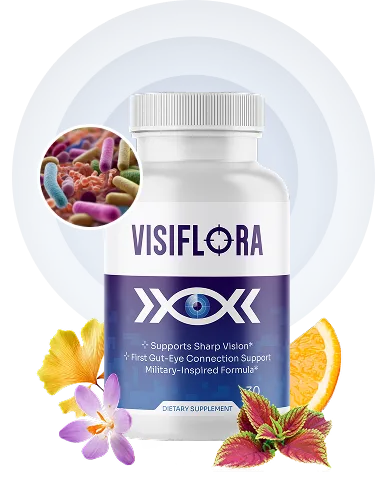
Maintaining comfortable, healthy vision can become more challenging with long screen hours, daily stress, aging, and changing nutritional needs. Many people looking for everyday eye support want to understand what they are actually taking, which ingredients are included, and whether a supplement fits into their routine. VisiFlora is positioned as a daily vision-support supplement that combines vitamins, minerals, antioxidants, and botanical ingredients with a focus on the gut-eye connection.
In this guide, we take a closer look at VisiFlora, including its formula, VisiFlora ingredients, potential benefits, safety considerations, pricing, and how the product is intended to work. The goal is to provide clear, balanced information so readers can better understand the VisiFlora supplement before deciding whether to buy or order it. As with any dietary supplement, it should not replace professional eye care or treatment for an existing eye condition.
VisiFlora Reviews: Quick Overview
VisiFlora is a dietary supplement positioned around daily eye-health support and the gut-eye connection. The formula combines vitamins, minerals, antioxidants, carotenoids, and botanical extracts, with ingredients such as lutein, zeaxanthin, vitamin A, bilberry extract, and astaxanthin included in the advertised formula.
For anyone researching VisiFlora before making a purchase, the most important points to consider are its ingredients, intended benefits, safety information, price, and how the product is used. This VisiFlora review overview focuses on those details so readers can make a more informed decision rather than relying only on promotional claims.
Beyond the basic formula, people considering VisiFlora may also want to look closely at the ingredient list, serving information, safety guidance, and current purchase options. Understanding these details can help set realistic expectations and make it easier to decide whether the VisiFlora supplement is appropriate for your personal needs. It is also worth separating product information from broader eye-health evidence, since a dietary supplement should not be viewed as a substitute for regular eye examinations or professional medical advice.

Quick Summary
| Detail | Information |
|---|---|
| Product Name | VisiFlora |
| Product Type | Dietary supplement |
| Main Focus | Daily eye-health and gut-eye support |
| Formula | Vitamins, minerals, antioxidants & botanical extracts |
| Key Ingredients | Lutein, Zeaxanthin, Vitamin A, Bilberry, Astaxanthin & others |
| How It Works | Designed around nutritional eye support and the gut-eye connection |
| Suggested Use | Follow the current product label for serving instructions |
| Safety | Review the ingredients and consult a healthcare professional if you have a medical condition or take medications |
| Price | Check the current official offer for the latest VisiFlora price |
| Where to Buy | Use the VisiFlora official website or authorized purchase source |
| Money-Back Guarantee | 60-day guarantee stated on the product presentation |
What Is VisiFlora?
VisiFlora is a dietary supplement marketed for daily eye-health support, with a formulation that also focuses on the proposed connection between gut health and vision. According to the manufacturer’s presentation, VisiFlora combines vitamins, minerals, antioxidants, carotenoids, and botanical extracts intended to provide nutritional support for areas such as the retina, macula, and optic nerve. The listed formula includes ingredients such as lutein, zeaxanthin, vitamin A, zinc, bilberry extract, astaxanthin, and several other nutrients and plant extracts.
The VisiFlora supplement is designed to be used as part of a daily wellness routine rather than as a replacement for professional eye care. People considering this product may want to examine the VisiFlora ingredients, serving instructions, safety information, and current VisiFlora price before deciding whether to buy. It is also important to distinguish the manufacturer’s product claims from established clinical evidence, particularly when dealing with existing eye conditions or changes in vision. The product page itself advises consulting a qualified healthcare professional when appropriate and states that its claims have not been evaluated by the FDA.
How Does VisiFlora Work?
Balmorex Pro is a topical cream designed to be applied directly to areas where users experience muscle, joint, or back discomfort. According to the product information, its formula combines ingredients such as MSM, arnica oil, hemp seed oil, aloe vera, Indian frankincense, and ginger root. The cream is designed to absorb into the skin and provide localized soothing support rather than being taken as an oral supplement.
The manufacturer describes several ingredients as supporting a healthy inflammatory response and helping with feelings of stiffness or soreness. MSM and botanical extracts such as arnica and Boswellia are highlighted in the formula, while ingredients including aloe vera and shea butter are included in the topical base. However, the product’s promotional claims should be distinguished from clinical evidence, and individual results can vary. Balmorex Pro should not be considered a replacement for professional evaluation when pain is persistent, severe, or associated with an underlying medical condition.
Because Balmorex Pro is applied to the skin, users should also consider how their skin responds to topical products. The manufacturer describes the formula as non-greasy and fast-absorbing, but individual skin sensitivity can vary. Following the product’s application directions and checking the ingredient list before use can help users make a more informed choice. If discomfort is persistent, worsening, or linked to an injury or diagnosed condition, professional medical advice is more appropriate than relying solely on a topical product.
VisiFlora Ingredients
VisiFlora is presented as a multi-ingredient dietary supplement combining vitamins, minerals, carotenoids, amino acids, antioxidants, and botanical extracts. The manufacturer groups the listed ingredients into four categories: Vision Defense Matrix, Gut-Eye Barrier Complex, Vision Performance Boosters, and Macular & Lens Protection Blend. The product page describes the formula as containing 22 ingredients, although the visible presentation names 21 individual ingredients, so readers should check the current product label for the complete formulation and exact amounts.
It is also important to understand that the presence of an ingredient in a supplement does not automatically mean that the finished product has been clinically proven to provide every benefit described in marketing materials. Evidence can vary considerably from one ingredient to another, and research on an individual nutrient does not necessarily establish the effectiveness of a particular branded combination.
1. Astaxanthin
Astaxanthin is a naturally occurring carotenoid with antioxidant properties. It is commonly studied for its potential role in protecting cells from oxidative stress. VisiFlora includes astaxanthin as part of its Vision Defense Matrix.
For eye health, research has explored astaxanthin in areas such as visual fatigue and ocular function, but evidence should not be interpreted as proof that an astaxanthin-containing supplement can prevent or treat an eye disease. Its inclusion in VisiFlora is best understood as part of the product’s broader nutritional and antioxidant approach.
2. Vitamin C
Vitamin C is an essential water-soluble vitamin that contributes to normal antioxidant activity and several important functions throughout the body. It is also included in established eye-health supplement research.
The AREDS formulation studied by the National Eye Institute included vitamin C alongside vitamin E, zinc, copper, and beta-carotene. However, the AREDS formula uses specific doses for people with particular stages of age-related macular degeneration, so the presence of vitamin C in VisiFlora does not make the two products equivalent.
3. Vitamin E
Vitamin E is a fat-soluble antioxidant that helps protect cells from oxidative damage. VisiFlora lists vitamin E alongside vitamin C in its Vision Defense Matrix.
Vitamin E has also been studied as part of the AREDS formulation for age-related macular degeneration. Importantly, evidence for a specific high-dose combination cannot automatically be transferred to every supplement containing vitamin E. The amount and overall formulation matter when comparing products with clinical research.
4. Copper
Copper is an essential trace mineral involved in several biological processes, including normal connective-tissue formation and antioxidant enzyme activity. VisiFlora includes copper as part of its Vision Defense Matrix.
Copper also appears in the AREDS and AREDS2 formulations because it was included to help prevent copper deficiency associated with high zinc intake. This does not mean that every copper-containing supplement provides the same effects as AREDS2.
5. Selenium
Selenium is an essential trace mineral involved in antioxidant defense and normal thyroid and immune function. VisiFlora includes selenium as one of its nutritional components.
Although selenium has biological antioxidant roles, the presence of selenium alone should not be interpreted as evidence that VisiFlora can prevent or reverse a specific eye condition. The amount provided and the individual’s overall nutritional status are important considerations.
6. Chromium
Chromium is a trace mineral involved in normal macronutrient metabolism and insulin-related processes. VisiFlora lists chromium within its Vision Defense Matrix.
Its inclusion appears to reflect the product’s broader nutritional formulation rather than a proven treatment for an eye disease. Consumers should look at the actual quantity on the supplement label when evaluating the significance of any mineral in a multi-ingredient formula.
7. Grape Seed Extract
Grape seed extract is derived from grape seeds and contains plant compounds known as proanthocyanidins. These compounds have antioxidant properties and have been studied for their potential biological effects.
VisiFlora places grape seed extract within its Gut-Eye Barrier Complex. The product presentation connects this ingredient with its gut-focused approach, but claims about improving the gut barrier or producing downstream eye benefits should be regarded as product positioning unless supported by clinical evidence for the finished supplement.
8. Rutin
Rutin is a plant flavonoid found naturally in foods such as certain fruits, vegetables, and buckwheat. It has antioxidant properties and has been investigated for various biological activities.
In VisiFlora, rutin is included alongside grape seed extract and quercetin. While these compounds are commonly discussed in relation to antioxidant activity, that does not establish that the specific combination in VisiFlora produces a clinically meaningful improvement in vision.
9. Quercetin
Quercetin is a flavonoid naturally present in many plant foods, including onions, apples, and other fruits and vegetables. It has been widely investigated because of its antioxidant and other biological properties.
VisiFlora includes quercetin in its Gut-Eye Barrier Complex. Its role in the formula is therefore mainly associated with the supplement’s antioxidant and gut-focused concept. More research would be needed to determine whether this particular dose and combination provide measurable eye-health benefits in people.
10. Taurine
Taurine is an amino-acid-like compound naturally found in the human body and involved in several physiological functions. It is particularly abundant in certain tissues, including the eyes.
VisiFlora includes taurine in its Gut-Eye Barrier Complex. While taurine has biological importance in ocular tissues, the presence of taurine in a dietary supplement should not be interpreted as evidence that the product can restore damaged vision or treat an eye disease.
11. Alpha Lipoic Acid
Alpha lipoic acid, commonly called ALA, is a naturally occurring compound involved in energy metabolism and known for antioxidant activity. It can function in both water- and fat-soluble environments.
VisiFlora includes alpha lipoic acid as part of its Gut-Eye Barrier Complex. Its antioxidant properties make it relevant to a formula focused on nutritional defense, but research on alpha lipoic acid should not automatically be presented as clinical proof for VisiFlora itself.
12. Ginkgo Biloba
Ginkgo biloba is a botanical ingredient derived from the leaves of the Ginkgo biloba tree. It has been researched for circulation, cognitive health, and several other areas.
VisiFlora places ginkgo biloba within its Vision Performance Boosters category. However, evidence for ginkgo biloba in eye conditions is not conclusive. The National Center for Complementary and Integrative Health notes that research on ginkgo supplements for age-related macular degeneration is inconclusive.
13. Coleus Forskohlii
Coleus forskohlii is a botanical traditionally used in various systems of herbal medicine. Its active compound, forskolin, has been studied for effects on cellular signaling and other biological processes.
VisiFlora includes Coleus forskohlii in its Vision Performance Boosters blend. Because research on this botanical does not establish that the VisiFlora formula improves vision, it is more accurate to describe it as a component of the product’s formulation rather than making a definitive therapeutic claim.
14. Eyebright
Eyebright, also known by the botanical name Euphrasia, is a traditional herbal ingredient historically associated with eye-related preparations.
It is included in VisiFlora’s Vision Performance Boosters blend. Traditional use can provide context for why an ingredient was selected, but traditional use alone is not the same as modern clinical evidence. Consumers should therefore avoid assuming that eyebright can treat an eye disorder simply because it has a long history of traditional use.
15. Vitamin A / Beta-Carotene
Vitamin A is an essential nutrient with an important role in normal vision. Beta-carotene is a carotenoid that the body can convert into vitamin A.
VisiFlora lists vitamin A in the form of beta-carotene within its Macular & Lens Protection Blend. The National Eye Institute explains that beta-carotene can be converted into vitamin A, which is required by the retina for normal light detection.
There is an important safety distinction here: high-dose beta-carotene was part of the original AREDS formula, but AREDS2 replaced beta-carotene with lutein and zeaxanthin because beta-carotene increased lung-cancer risk in current smokers and former smokers. This is one reason consumers should not assume that every eye supplement is interchangeable with AREDS2.
16. Lutein
Lutein is a carotenoid naturally found in the retina and lens. It is particularly concentrated in the macular region of the eye.
Lutein has some of the stronger evidence among the carotenoids commonly discussed in eye-health supplements. In the AREDS2 clinical trial, lutein and zeaxanthin were studied in people who already had intermediate or late AMD in specific circumstances. The National Eye Institute reports that people with very low dietary intake of lutein and zeaxanthin experienced greater benefit from supplementation in the trial.
This evidence should still not be interpreted as proof that VisiFlora itself prevents or treats AMD because VisiFlora is not the AREDS2 formula.
17. Zeaxanthin
Zeaxanthin is another carotenoid naturally present in the retina, particularly in the central macular region. Together with lutein, it is an important component of the macular pigment.
VisiFlora includes zeaxanthin alongside lutein. AREDS2 specifically investigated a combination of lutein and zeaxanthin, using 10 mg of lutein and 2 mg of zeaxanthin in the studied formulation. The clinical evidence therefore applies to that researched formulation and population, not automatically to any supplement containing these two ingredients.
18. Zinc
Zinc is an essential mineral involved in numerous biological processes, including normal cellular function and immune activity. It is also important in the eye.
The VisiFlora product presentation lists zinc at 11 mg. Zinc was also included at a much higher dose in the AREDS2 formulation, but the amount and complete formulation were specifically designed for people with certain stages of AMD. Therefore, VisiFlora’s zinc content should not be presented as equivalent to an AREDS2 supplement.
19. Bilberry Extract
Bilberry is a berry rich in anthocyanins and other plant compounds. Bilberry extracts have been studied for various vascular and visual-health applications.
VisiFlora includes bilberry extract in its Macular & Lens Protection Blend. Although bilberry is frequently promoted for night vision and circulation, stronger clinical evidence is needed before making definitive claims about its ability to improve vision or treat an eye condition.
20. Lycopene
Lycopene is a naturally occurring carotenoid found in foods such as tomatoes and other red or pink fruits. It is known for its antioxidant properties.
Within VisiFlora, lycopene is included in the Macular & Lens Protection Blend. Its antioxidant characteristics fit the overall nutritional concept of the formula, but the presence of lycopene does not by itself demonstrate a clinically proven effect on visual acuity or eye disease.
21. Saffron Extract
Saffron extract is derived from the Crocus sativus plant and contains several bioactive compounds. It has been investigated in research involving different aspects of health, including certain areas of visual function.
VisiFlora includes saffron extract among its listed ingredients. While some research has explored saffron in relation to visual outcomes, evidence from studies of an individual ingredient should not automatically be treated as proof of the effectiveness of the complete VisiFlora supplement.
What Does the Evidence Tell Us About These Ingredients?
The ingredient list contains several nutrients that have legitimate biological roles and, in some cases, have been studied specifically in eye-health research. Lutein and zeaxanthin are particularly notable because they were evaluated in the large AREDS2 clinical trial. However, the evidence is specific to the studied formulation, dosage, and population. The National Eye Institute recommends discussing with an eye-care professional whether an AREDS2 supplement is appropriate for an individual.
For the other VisiFlora ingredients, evidence varies from established nutritional functions to preliminary, traditional, or inconclusive research. Therefore, it is more accurate to describe VisiFlora as a multi-ingredient nutritional supplement rather than claim that every ingredient has been clinically proven to improve vision. Anyone with an existing eye condition, significant vision changes, or concerns about supplement interactions should speak with an appropriate healthcare professional before starting a new supplement.
What Makes VisiFlora Different?
One feature that sets VisiFlora apart from many conventional eye-health supplements is its focus on the connection between nutritional support and the gut-eye axis. Instead of presenting the formula as a single-ingredient product, VisiFlora combines carotenoids, vitamins, minerals, antioxidants, amino acids, and botanical extracts in one daily formula. The manufacturer specifically positions this approach around supporting both eye-related nutrition and digestive balance.
Another distinguishing point is the range of ingredients included in the formula. VisiFlora contains nutrients such as lutein, zeaxanthin, vitamin A, vitamin C, vitamin E, zinc, selenium, and copper, along with plant-derived ingredients including bilberry, ginkgo biloba, grape seed extract, saffron, and eyebright. This broad formulation may appeal to people who prefer a comprehensive supplement rather than purchasing several individual nutrients separately.
The formula also includes ingredients that have been studied individually for aspects of eye or nutritional health. For example, lutein and zeaxanthin have been investigated extensively in the context of macular health, including in the AREDS2 clinical trial. However, this does not mean VisiFlora itself has been clinically proven to produce the same outcomes as AREDS2. The evidence should be considered ingredient by ingredient, as well as in relation to the specific amounts and combination used in the finished product.
For someone researching VisiFlora before deciding whether to buy, this broader formulation is worth considering alongside practical factors such as the complete ingredient label, individual ingredient amounts, safety information, serving instructions, and current VisiFlora price. A more comprehensive formula is not automatically better for every person, so individual nutritional needs and existing health considerations should also be taken into account.
Benefits of VisiFlora
VisiFlora is designed as a daily nutritional supplement focused on eye health while also incorporating ingredients intended to support the gut-eye connection. Its formula combines vitamins, minerals, antioxidants, carotenoids, and botanical extracts, including lutein, zeaxanthin, vitamin A, zinc, bilberry, astaxanthin, and other compounds. The manufacturer positions this combination as a comprehensive approach to everyday vision support rather than relying on a single nutrient.
Supports Everyday Eye Health
One of the main potential benefits of VisiFlora is nutritional support for overall eye health. Nutrients such as vitamin A, vitamin C, vitamin E, zinc, lutein, and zeaxanthin are included in the formula and are associated with important functions related to normal vision and eye tissues. However, the presence of these nutrients does not mean VisiFlora can treat or prevent an eye disease.
Provides Antioxidant Support
VisiFlora contains several antioxidant ingredients, including vitamins C and E, astaxanthin, grape seed extract, quercetin, and lycopene. Antioxidants help protect cells from oxidative stress, making antioxidant nutrition an important part of a balanced diet. The specific benefits of combining these ingredients in VisiFlora have not been established as equivalent to a clinically tested eye-disease treatment.
Includes Lutein and Zeaxanthin
Lutein and zeaxanthin are notable components of the formula because they have been studied in the context of eye health. They are also included in the AREDS2 formulation used for certain people with age-related macular degeneration. Importantly, VisiFlora is not the same formulation as AREDS2, so evidence for AREDS2 should not automatically be interpreted as evidence that VisiFlora produces the same results.
Supports Nutritional Protection for Vision
The formula also includes vitamin A, zinc, copper, selenium, and other nutrients that contribute to normal physiological functions relevant to vision. For people whose diets do not provide adequate amounts of certain nutrients, obtaining sufficient nutrition can be an important part of maintaining overall health. A supplement should complement—not replace—a varied, balanced diet and appropriate eye care.
Takes a Broader Gut-Eye Approach
Another distinguishing feature is VisiFlora’s focus on the gut-eye connection. The manufacturer combines eye-focused nutrients with ingredients such as grape seed extract, rutin, quercetin, taurine, and alpha lipoic acid as part of its Gut-Eye Barrier Complex. This gives the product a broader formulation than a basic single-nutrient eye supplement, although the effectiveness of the complete VisiFlora combination has not been established by the same evidence used for specific clinically studied formulations.
Overall, the potential benefits of VisiFlora are best understood as nutritional and supportive rather than therapeutic. Anyone considering a VisiFlora supplement should check the complete ingredient list, serving information, personal dietary needs, possible medication interactions, and current product guidance before use.
How to Use VisiFlora
Using VisiFlora is intended to be simple and easy to fit into a daily wellness routine. According to the current product presentation, the suggested use is one capsule daily with food. Taking it with a meal can also make it easier to maintain a consistent routine. Always follow the instructions provided on the current product label or packaging if they differ from information found online.
For people considering a VisiFlora supplement, consistency is important when following any dietary supplement routine. It should be used as directed rather than taking additional capsules in an attempt to achieve faster results. VisiFlora is intended to complement healthy lifestyle and nutrition habits, not replace a balanced diet or professional eye care.
Before starting VisiFlora, carefully review the complete ingredient list, particularly if you take prescription or over-the-counter medications or have an existing medical condition. The product’s own guidance recommends speaking with a qualified healthcare professional before use if you are pregnant, nursing, taking medication, or have a medical condition.
It is also important to keep realistic expectations. A dietary supplement should not be considered a treatment for vision disorders, and changes in vision, persistent eye discomfort, sudden vision loss, flashes, or other concerning symptoms should be evaluated by an eye-care professional rather than managed with supplements alone.
Pros and Cons of VisiFlora
Pros of VisiFlora
- Broad nutritional formula: VisiFlora combines vitamins, minerals, antioxidants, carotenoids, and botanical extracts in one daily supplement.
- Contains lutein and zeaxanthin: These nutrients have been studied in relation to eye health and are included in the AREDS2 formulation for certain people with age-related macular degeneration, although VisiFlora is not the same formula as AREDS2.
- Includes several antioxidant nutrients: Vitamin C, vitamin E, astaxanthin, lycopene, and other ingredients provide nutritional antioxidant support.
- Gut-eye focus: The formula is specifically positioned around the gut-eye connection and includes ingredients such as grape seed extract, rutin, quercetin, taurine, and alpha lipoic acid.
- Simple daily routine: The current product presentation recommends one capsule daily with food, making the supplement relatively straightforward to incorporate into a routine.
- Vegan and stimulant-free: According to the manufacturer, VisiFlora is 100% vegan and stimulant-free.
- 60-day money-back guarantee: The current product presentation states that purchases are covered by a 60-day money-back guarantee.
Cons of VisiFlora
- Not a substitute for professional eye care: VisiFlora is a dietary supplement and should not be relied upon to diagnose, treat, or prevent an eye condition.
- Limited information on individual ingredient amounts: The product presentation identifies many ingredients, but it does not provide individual quantities for most of them, making it harder to compare the formula directly with clinically studied formulations.
- The complete formula has not been established as equivalent to AREDS2: Although VisiFlora contains some nutrients also found in AREDS2, the two products have different formulations and should not be treated as interchangeable.
- Results can vary: Individual responses to dietary supplements can differ, and the manufacturer itself states that results are not guaranteed.
- May not be suitable for everyone: People who are pregnant, nursing, taking medication, or managing a medical condition are advised to consult a healthcare professional before use.
Who May Consider VisiFlora?
- Adults looking for daily eye-health support as part of a balanced lifestyle and nutrition routine.
- People interested in a multi-ingredient formula containing vitamins, minerals, carotenoids, antioxidants, and botanical extracts.
- Those looking for lutein and zeaxanthin as part of their nutritional approach to eye health.
- People interested in the gut-eye connection and a supplement that combines eye-focused nutrients with gut-oriented ingredients.
- Adults seeking a convenient daily supplement that can be incorporated into a regular wellness routine.
- People who want nutritional antioxidant support from ingredients such as vitamin C, vitamin E, astaxanthin, and lycopene.
- Individuals comparing eye-health supplements who want to examine the ingredients, serving instructions, and overall formula before making a decision.
- People who understand that VisiFlora is a dietary supplement, not a replacement for professional eye examinations or medical treatment.
VisiFlora Pricing and Packages
VisiFlora is currently offered in three package options. The price per bottle decreases with the larger packages, while each package includes the three digital bonus ebooks listed on the product page. Pricing and availability can change, so it is best to confirm the current offer before placing an order.
| Package | Supply | Price Per Bottle | Total Price | Free Bonuses | Shipping |
|---|---|---|---|---|---|
| Try Two | 60 Days (2 Bottles) | $79 | $158 | Not Included | Additional Shipping Charges |
| Most Popular | 90 Days (3 Bottles) | $59 | $177 | 2 FREE Digital Bonuses | FREE U.S. Shipping |
| Best Value ⭐ | 180 Days (6 Bottles) | $49 | $294 | 2 FREE Digital Bonuses | FREE U.S. Shipping |
Money-Back Guarantee
VisiFlora currently comes with a 60-day money-back guarantee, according to the official product presentation. This gives customers a 60-day period to try the product and decide whether it is suitable for them.
The official page states that customers who are not completely satisfied can return the bottles for a refund. Before purchasing, it is recommended to check the current return policy for the latest requirements, eligibility conditions, and return instructions.
Free Bonuses Included with VisiFlora
According to the current VisiFlora product presentation, customers receive three digital bonus ebooks designed to complement the product’s focus on eye wellness and the gut-eye connection. Each bonus covers a different area, from everyday eye-care habits to nutrition and practical vision-support tips.
Bonus #1: The Military Vision Protection Manual
The Military Vision Protection Manual is a digital guide focused on practical eye-care techniques and exercises. According to the product page, it includes methods associated with reducing eye strain, improving focus, and supporting comfortable vision during visually demanding activities.
The guide may be particularly useful for people who spend long periods reading, working on computers, using smartphones, or performing other tasks that require sustained visual attention. Rather than being another supplement, this bonus focuses on everyday habits and techniques that can be incorporated alongside a regular eye-care routine.
Listed Value: $97
Bonus #2: The Gut-Eye Healing Protocol
The Gut-Eye Healing Protocol is a digital guide centered around the connection between digestive health and eye wellness. The product presentation describes it as a 7-day gut-focused plan that includes 21 easy recipes, giving readers practical ideas for incorporating different foods into their daily routine.
The bonus is designed to complement VisiFlora’s broader gut-eye approach by focusing on nutrition and dietary habits. It can provide a structured starting point for people who want to pay more attention to what they eat while building healthier everyday routines.
Listed Value: $67
Bonus #3: The 48-Hour Vision Jump-Start
The 48-Hour Vision Jump-Start is a digital ebook containing practical information related to common eye-comfort concerns. According to the product page, the guide covers topics including dry eyes, floaters, yellow discharge, and light sensitivity.
This bonus is intended as an informational resource rather than a replacement for professional eye care. People experiencing persistent, unusual, or worsening eye symptoms should seek advice from a qualified eye-care professional instead of relying solely on information from a digital guide.
Listed Value: $50
All three bonuses are presented as digital downloads included with the VisiFlora purchase packages. Their purpose is to provide additional educational material covering eye-care habits, nutrition, and the product’s gut-eye wellness concept.
VisiFlora Customer Reviews
Customer feedback can provide useful insight into how some users describe their experience with VisiFlora, although individual experiences should not be considered a guarantee of results. The testimonials displayed on the product website mention areas such as eye comfort, night vision, and reduced eye strain. The product page also states that individual results may vary.
What Customers Say About VisiFlora
- Corinne F., Arizona: Reported that her eyes felt less tired and that she noticed an improvement in her night vision.
- James V., Ohio: Described feeling more comfortable while driving at night and experiencing less squinting or visual strain.
- Rachel S., Florida: Reported noticing less eye fatigue while reading and said that floaters became less noticeable.
These experiences represent testimonials presented by the manufacturer and should be viewed as personal accounts rather than clinical evidence that VisiFlora produces the same results for everyone. The official website specifically notes that testimonial results are not guaranteed and that individual outcomes can vary.
Frequently Asked Questions
What is VisiFlora?
VisiFlora is a dietary supplement formulated with vitamins, minerals, antioxidants, carotenoids, and botanical extracts. It is marketed for daily eye-health support and includes a focus on the gut-eye connection.
What are the main ingredients in VisiFlora?
The formula includes ingredients such as lutein, zeaxanthin, vitamin A, vitamin C, vitamin E, zinc, copper, selenium, astaxanthin, bilberry extract, grape seed extract, ginkgo biloba, saffron, and other nutrients and botanical extracts.
How should I take VisiFlora?
The current product presentation recommends taking one capsule daily with food. Always follow the serving instructions on the product label if they differ from information published online.
Is VisiFlora safe?
As with any dietary supplement, suitability can vary from person to person. Anyone who is pregnant, nursing, taking medication, or has a medical condition should consult a healthcare professional before using VisiFlora.
How long does VisiFlora take to work?
There is no reliable timeframe that applies to everyone. Individual responses to nutritional supplements can vary, so it is better to avoid expecting a specific result or an overnight change.
Can VisiFlora replace an eye examination?
No. VisiFlora is a dietary supplement and should not replace regular eye examinations, professional diagnosis, prescription treatment, or other medical care when needed.
Where can I buy VisiFlora?
VisiFlora is promoted primarily through its online sales pages. Before purchasing, verify that you are using the current authorized sales source and check the latest price, package details, shipping terms, and guarantee information.
Does VisiFlora have a money-back guarantee?
Yes. The current product presentation states that VisiFlora is backed by a 60-day money-back guarantee. Check the current refund terms before purchasing, as conditions may apply.
Is VisiFlora the same as AREDS2?
No. Although VisiFlora contains some nutrients that are also found in AREDS2, such as lutein and zeaxanthin, the formulas are different. Evidence for AREDS2 should not automatically be interpreted as evidence for VisiFlora.
Who should consult a doctor before using VisiFlora?
People who are pregnant or nursing, have an existing medical condition, take prescription medications, or have concerns about their vision should speak with a qualified healthcare professional before starting any new supplement.
Scientific References
- National Eye Institute (NEI) – AREDS/AREDS2 Clinical Trials
Covers the evidence behind antioxidant vitamins, zinc, lutein, and zeaxanthin for people with certain stages of age-related macular degeneration (AMD).
Read the National Eye Institute research - National Eye Institute – AREDS/AREDS2 Frequently Asked Questions
Provides information about the AREDS2 formula, including vitamin C, vitamin E, zinc, copper, lutein, and zeaxanthin.
Read the NEI AREDS/AREDS2 FAQ - AREDS2 Randomized Clinical Trial – JAMA / PubMed
A large randomized clinical trial evaluating lutein and zeaxanthin, omega-3 fatty acids, and modifications to the AREDS formulation.
View the AREDS2 study on PubMed - NCCIH – Dietary Supplements for Eye Conditions: What the Science Says
Reviews current evidence concerning supplements used for AMD and other eye conditions, including lutein/zeaxanthin and Ginkgo biloba.
Read the NCCIH evidence summary - NCCIH – Dietary Supplements for Eye Conditions
Provides an evidence-based overview of what is and isn’t currently supported for different eye conditions.
Read the NCCIH clinical evidence overview - AREDS2 Study Design and Baseline Characteristics – PubMed
Details the design, participants, nutrient doses, and methodology of the AREDS2 clinical trial.
View the AREDS2 study design on PubMed
Related Health Product Reviews
Sugar Defender Review
Sugar Defender is a dietary supplement positioned around healthy blood sugar and metabolic support. Its formula combines natural ingredients intended to complement a healthy lifestyle and daily wellness routine.
Balmorex Review
Balmorex Pro is a topical formula designed to support everyday joint, muscle, and back comfort. It features a multi-ingredient blend and is intended for convenient use as part of an active wellness routine.
DentaBiome Review
DentaBiome is an oral-health supplement focused on supporting a balanced oral microbiome, fresh breath, healthy gums, and everyday dental wellness. It comes in a chewable format designed to complement regular brushing and flossing.
Related Spiritual Product Reviews
The Wealth Signal
The Wealth Signal is a digital audio program focused on wealth mindset, manifestation, and subconscious reprogramming. It uses a short 9-word wealth script combined with guided audio and sound frequencies to encourage more positive thinking around money and abundance.
Genius Brain Signal
Genius Brain Signal is a short audio-based program designed around brainwave entrainment and Theta-state listening. It is marketed to support focus, creativity, relaxation, mental clarity, and cognitive engagement through a simple daily listening routine.
The Forbidden Secret
The Forbidden Secret is a digital manifestation program centered on concepts such as the “Quantum Antenna,” guided audio, and Reality Codes. It is designed to help users develop an abundance-focused mindset and work toward personal goals through visualization and audio-based practices.
The Money Script
The Money Script is a faith-based digital program that combines spiritual principles, guided audio, prayers, and practical money habits. Its focus is on changing limiting beliefs about money while encouraging financial clarity, purposeful habits, and a more positive relationship with wealth.
The Genius Switch
The Genius Switch is a digital audio program centered on brainwave entrainment, binaural beats, and sound-based techniques. It is marketed as a simple daily listening tool for supporting focus, mental clarity, creativity, and a calmer state of mind.